Lab Workflow Builder
ROLE
UX DESIGNER · END-TO-END
TYPE
DESIGN CHALLENGE
SCOPE
IA · INTERACTION · UI
Role
UX DESIGNER · END-TO-END
Type
DESIGN CHALLENGE
Scope
IA · INTERACTION · UI
Helping lab managers build, scan, and monitor complex workflows through a structure-first SaaS system.
This case study is still finding its feet on smaller screens.
In the meantime,
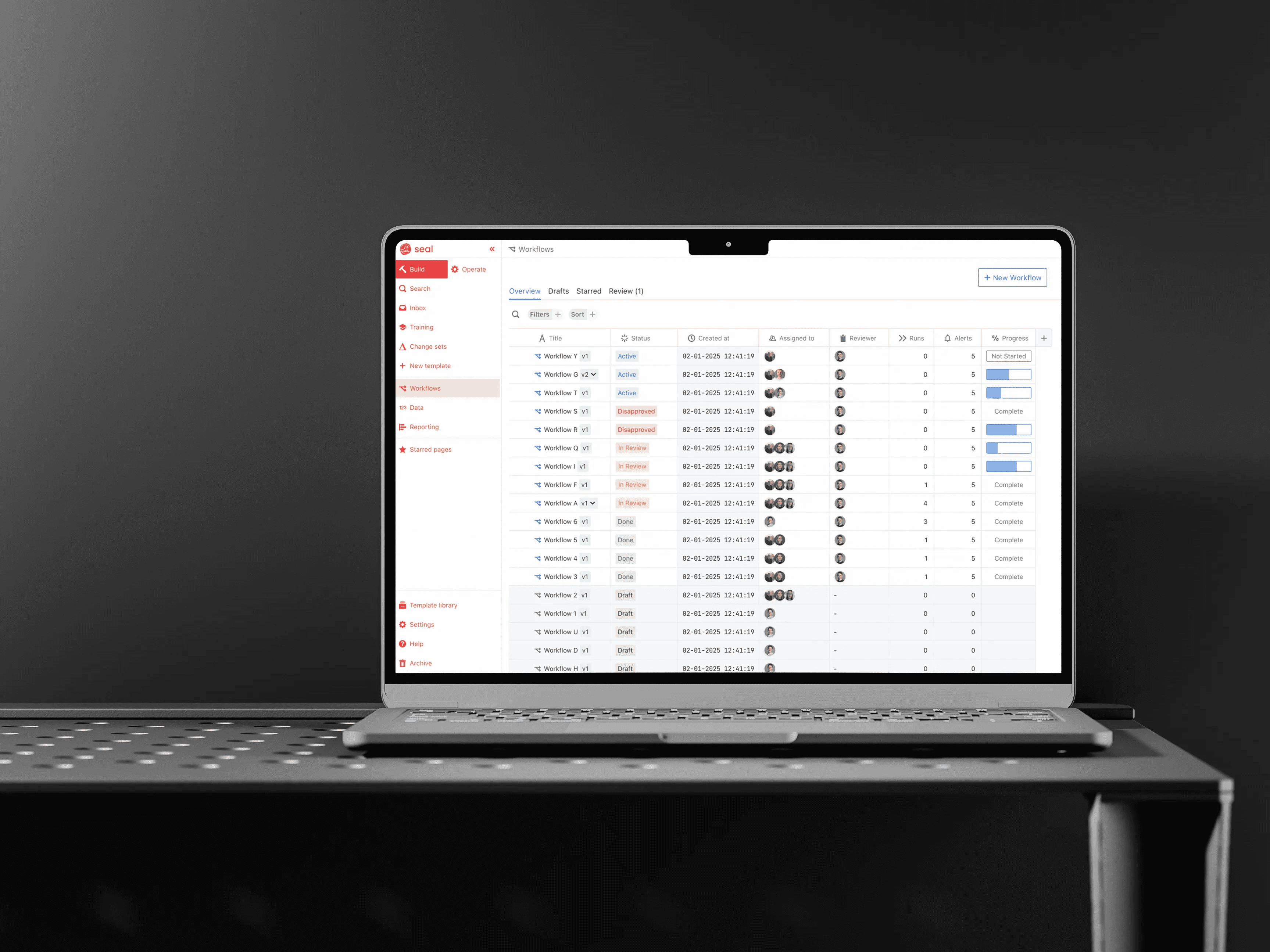
CONTEXT & RESTRAINTS
1 week,
1 existing design system,
0 user context.
The challenge demanded high clarity, usability, and aesthetic calibration while seamlessly fitting into the existing design system. There was no established workflow pattern or user insight, so the information architecture, interaction model, and validation logic had to be defined from the ground up.

THE PROBLEM
Lab workflow management is fundamentally different from office workflow management.
Before evaluating existing tools, we need to first understand a lab manager's journey:
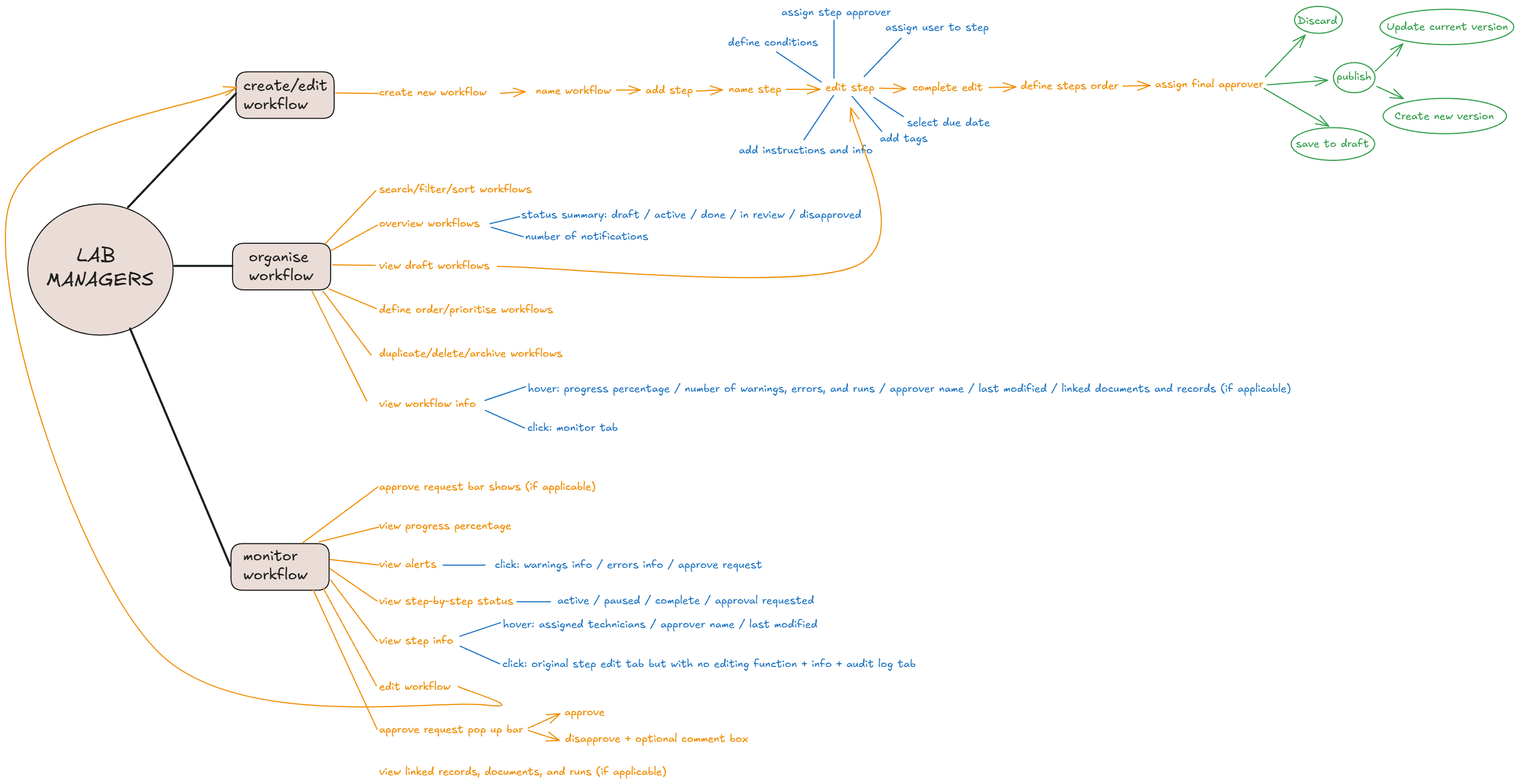
A lab manager's task flow is shaped by
complex steps, dependencies, and zero room for error.
This complexity exposes three shortcomings in existing workflow builders:
01
Not tailored to lab needs
Built for office-style workflows, not parameter-heavy laboratory processes.
02
Break under complex logic
Conditions, approvals and dependencies quickly become difficult to manage.
03
Difficult to scan
Critical workflow information becomes harder to locate under time pressure.
DESIGN APPROACH
A three-layer system that supports structure instead of prioritising simplification
Dashboard
01 · Orient
Overview of workflows
View by workflow status
Advanced search, filtering, and sorting
Customisable table columns
Builder
02 · Construct
Properties configuration
Modular step construction
Workflow logic and role assignment
V1
Versioned publishing and actions
Monitor
03 · Oversee
Workflow progress overview
Step and task-level inspection
Review and actions
Execution insights and logs
ITERATION
Refining structure through iteration


This iteration explored flexible workflow navigation across high-density operational views. Quick-action tabs, clear primary actions, and adaptable workflow structures were introduced to reduce interaction friction during workflow management.


This iteration simplified screen behaviour and improved layout clarity. Scrollable regions were limited to workflow tables and step builders, creating a cleaner and more intuitive workflow management experience.
Final Product
A structured interface that makes complex workflows
legible, scalable,
and
actionable.

01 Dashboard -
Legible
Colour-coded statuses and configurable columns help users scan workflow information more efficiently.

02 Builder -
Scalable
Modular steps can be reordered, edited, and expanded independently, supporting workflows of varying complexity.

03 Monitor -
Actionable
Workflow state, progress, and ownership are visible at both step and task level.
This case study is still finding its feet on smaller screens.
In the meantime,
check out
© 2026 Lillian Li. Powered by flat whites and sheer will.
lillianlistudio@gmail.com
© 2026 Lillian Li. Powered by flat whites and sheer will.
lillianlistudio@gmail.com
© 2026 Lillian Li. Powered by flat whites and sheer will.
lillianlistudio@gmail.com